“Just stay positive.” If I had a dollar for every time I’ve heard that, I’d be able to buy enough coke to survive whatever fresh chaos today brings. Staying positive sounds simple. Pinterest makes it look easy. A cute quote, a sunrise photo, maybe a mug that says Good Vibes.
Real life, though?
Real life doesn’t care about your mug. Because some days are heavy. Some seasons feel long. Some mornings start with exhaustion before your feet even hit the floor, and on those days, “positivity” feels less like a mindset and more like an Olympic sport you didn’t train for.
Here’s the truth I’ve learned:
Staying positive doesn’t mean pretending everything is fine. It means choosing not to let the hard stuff steal everything else too. Some days, positivity looks like laughter, gratitude, and big wins. Other days, it looks like getting out of bed, feeding what needs fed, doing the next right thing, and calling that enough.
You don’t have to wake up joyful to be positive. You don’t have to ignore frustration to be hopeful. You don’t have to fake happiness to keep going.
Sometimes staying positive is letting yourself feel disappointed — without unpacking and living there! It’s acknowledging, this is hard, while still believing, this isn’t the end of the story. For me, staying positive often looks very unglamorous. It’s finding humor ( dark humor lol ) in the mess.
It’s focusing on what I can control when everything else feels loud. It’s reminding myself that bad days don’t cancel out a good life.
It’s celebrating small victories:
A task finished A quiet moment A deep breath that finally feels steady A night where sleep actually shows up Positivity grows in small places. It shows up when you stop comparing your behind-the-scenes to someone else’s highlight reel. When you give yourself grace instead of guilt.
When you allow progress to count, even if it’s slow. And some days? Staying positive just means surviving with your kindness intact. That counts too!
So if today feels heavy, here’s your permission slip: You don’t need to sparkle. You don’t need to smile for the sake of others. You don’t need to have it all figured out.
Just keep going. One step. One breath. One honest moment at a time. That’s not weakness. That’s resilience. And that, in its own quiet way, is staying positive!
Thanks for reading, please share, like,and comment!
Catching a cold on the homestead is a special kind of betrayal. Not by your body—that’s expected. But by the idea that maybe, just maybe, you could rest.
Because the animals did not get the memo. They do not care that your head feels like it’s stuffed with hay.
They do not care that you’re operating on one nostril and pure spite. Chores must be done!
I woke up optimistic. I thought, “It’s just a sniffle. I’ll power through.” Reader, this was a lie.
By the time I made it outside, I was wrapped in three layers, coughing like I’d stuck my head in the hay loft, and already regretting my earlier confidence.
The chickens stared at me like I was late for a meeting they scheduled. The goats screamed like they hadn’t been fed in weeks (it had been eight hours). The water buckets somehow weighed 400 pounds more than usual.
Every chore took twice as long because I had to stop and:
Blow my nose
Find the tissue I just had Realize it disintegrated in my pocket (ew, I know)
Pause to mentally prepare myself for the next task
You don’t realize how much you rely on breathing through your nose until it stops working and you’re hauling feed while gasping like a fish. Let’s talk about coughing while doing chores.
There is nothing more humbling than bending over to scoop grain and being hit with a coughing fit so violent you have to pause—hands on knees—staring into the dirt like it owes you money.
The animals, of course, watched…Judging. Silently—just kidding. Loudly judging.
There were moments I considered skipping things. Do they really need me to top off their waters? Yes. Yes they do. The answer is always yes.
So I kept going. I hauled the buckets. I filled the waters. Because that’s the deal. Homesteading doesn’t pause for colds, flus, or aching bodies. You just do the work slower.
You complain louder. And you go back inside dramatically afterward. When chores were finally done, I shuffled inside like a war hero. Wet boots. Cold hands. Red nose. A deep sense of accomplishment… followed closely by a very much needed nap.
Having a cold while homesteading? Would I recommend it? Let’s just say it builds character… and a very strong relationship with tissues.
But there’s something oddly satisfying about knowing you showed up anyway. That even when you felt awful, the animals were fed, the water was full, and the day kept moving.
Tomorrow I’ll probably still be sick. The chores will still be there. And I’ll still be out there—layered up, tissues in every pocket, muttering under my breath like a true homesteader Because around here, the motto isn’t “Feel better soon.” It’s “Blow your nose and get it done.”
Thank you for reading, please share, follow, or comment!
Winter on the homestead arrives every year like a surprise you absolutely did not ask for. It’s cold, It’s icy and suddenly every chore takes three times longer because your fingers stopped working somewhere around November.
While other people are inside enjoying heat and cozy blankets, livestock owners are outside performing winter gymnastics with frozen buckets and being stared at by animals who believe you are late. Always late!
Water: A Trust Exercise That Always Fails. Providing water in winter is a fun daily reminder that nothing on the homestead is ever simple.
You break ice. You carry buckets. You invest in heated waterers. They might freeze anyway.
The animals wait patiently—meaning they stand there staring at you like, “Wow. Took you long enough.” You work faster, they judge harder, and no one acknowledges that this happens twice a day!
Feeding Time: Starvation, According to Them
Cold weather means livestock need more calories, which is understandable. What’s less understandable is the way they act like they’ve never eaten before in their entire lives.
The feeder is empty? Tragic. The feeder is half full? Unacceptable. The feeder is full? Temporary relief, followed by suspicion.
Hay disappears overnight, grain is inhaled, and you briefly consider whether your animals have secret meetings about how to demand more food.
Shelter: Provided, Ignored, Criticized. You build shelter. You block wind. You add fresh bedding. You step back and admire your work. They choose to stand outside in the snow. You open the barn doors no one goes in. You close the doors they suddenly need in. You add bedding and there is always one who will go over and pee on it the minute it hits the ground. Shelter matters, of course. Dry, draft-free spaces are essential in winter, even if the animals act like they could’ve done it better themselves.
Daily Checks: Overthinking Is Now a Hobby, winter turns every livestock owner into a full-time observer.
You watch them eat. You watch them walk. You watch them breathe. “Are you losing weight?” “Are you limping?” “Why are you standing like that?”
Sometimes it’s a real concern. Sometimes they’re just… like that. Winter teaches you quickly who is stoic and who thrives on attention.
Why We Keep Doing This, Winter livestock care is cold, exhausting, and wildly underappreciated. At the end of the day, everyone is fed, watered, and settled in—and that counts for something.
Because even when it’s miserable, even when everything is frozen, you show up. And somehow, when spring comes, you’ll forget all about this. You’ll say things like, “Winter wasn’t that bad.” Which is hilarious. See you tomorrow, With hay, and coke.
Thanks for reading. Please share, comment, and follow!
There comes a moment on the homestead when you realize you’ve crossed a line. For some people it’s baking sourdough daily. For others it’s owning more canning jars than cups.
For me?
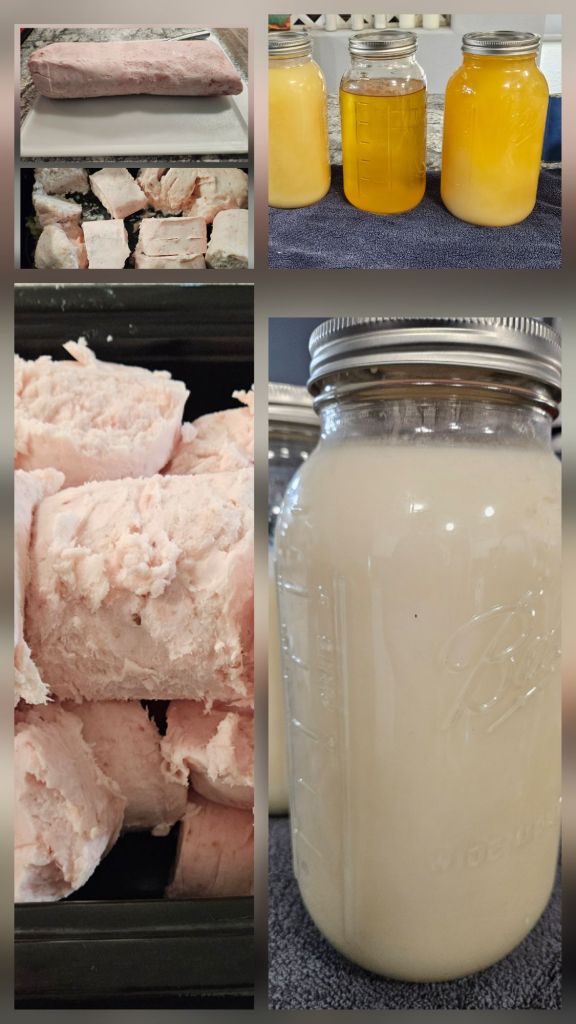
I was standing in my kitchen, surrounded by slowly melting pig fat, thinking, “Wow. This smells like productivity.”
Welcome to the world of rendering pig fat—also known as making lard—and yes, it’s exactly as old-fashioned, practical, and oddly satisfying as it sounds.
First of All… Why Render Pig Fat?
Because wasting good fat feels like a crime. Because store-bought lard doesn’t even compare. Because once you realize how versatile real lard is, you start eyeing every pie crust, biscuit, and cast-iron pan differently. Rendered lard is fantastic for cooking and baking, shelf-stable when stored correctly, and a homestead staple our great-grandparents swore by.
It also somehow makes you feel wildly accomplished for doing something humans have done forever. And if you’re already raising pigs? It’s basically free.
A Quick Word About Pig Fat Not all pig fat is the same, and knowing this upfront saves confusion later. Leaf fat—the soft fat from around the kidneys—is the gold standard. It’s clean, mild, and perfect for baking. Back fat and trimmings work beautifully too, especially for frying and everyday cooking, though they carry a slightly stronger pork flavor.
No matter the type, clean fat matters. Trim away any meat, blood spots, or questionable bits. Better trimming now means better lard later—and a better-smelling house.
The Setup:
t’s Simpler Than It Sounds Rendering pig fat doesn’t require fancy equipment or a culinary degree. A sharp knife, a heavy pot ( slow cooker or electric roaster oven), cheesecloth, a fine mesh strainer, and some patience are really all you need.
Cut the fat into chunks. Try to do it on the smaller size if you can. Smaller pieces render more evenly and more efficiently. This is not the moment to rush. Cold fat cuts easier, and future flaky biscuits depend on this step. The Process: Low, Slow, and Slightly Magical
Once everything is chopped, place the fat into your pot, slow cooker, or roaster oven and turn the heat to low. Very low. We’re melting, not frying. No water, no oil—just time.
As the fat heats, it slowly transforms. The solid pieces shrink and release their liquid, turning into crispy little cracklings while the pot fills with clear, glossy fat. Stir occasionally to keep things moving and prevent sticking. This can take anywhere from a couple of hours to most of the afternoon depending on how much fat you’re rendering.
You’ll know it’s ready when most of the fat has liquefied, the cracklings are golden and floating, and the bubbling slows way down. At that point, turn off the heat. Carefully strain the hot liquid through a fine mesh strainer lined with cheesecloth into a heat-safe container. I use both because I like my lard extra clean.
What you’re left with is liquid gold—pure, homemade lard. Pour the strained lard into clean glass jars and let it cool at room temperature. As it cools, it turns snowy white and solid, which is always deeply satisfying to watch. Storage (Yes, the Pantry Is an Option) Once cooled, label your jars with the date. Properly rendered lard can be stored in several ways.
In the pantry, in a cool, dark place, if it has been fully rendered, well strained, and sealed In the refrigerator for a longer shelf life In the freezer for long-term storage Pantry-stored lard should be used first and checked occasionally. Good lard smells clean and mild. If it ever smells sour or off, trust your nose and toss it.
Don’t Forget the Cracklings
Those crispy bits left behind are cracklings, and they’re a bonus. Sprinkle them with salt, add them to cornbread, or eat them straight from the bowl while pretending you’re just “quality testing.”
The Smell (Let’s Address It)
Yes, your house will smell like pig. Not bad pig. Just honest pig. It fades..the smile doesn’t!
Why It’s Worth It
Homemade lard makes the flakiest pie crusts, fries food beautifully, and seasons cast iron like a dream. It connects you to generations before grocery stores existed and gives you a quiet confidence that says, I can handle things.
There’s also something deeply satisfying about using every part of an animal with intention and respect. Nothing wasted. Nothing rushed.
Final Thoughts from the Lard Side of Life
Rendering pig fat isn’t glamorous. It’s not trendy. And it definitely won’t impress your city friends at dinner parties. But it will stock your pantry, save you money, and remind you that some of the best skills are the ones that smell a little funny and take a little time.
And if you ever find yourself labeling jars of lard like it’s completely normal— just know you’re doing it right.
2025 making lard
Thanks for reading. Please share, follow, and comment!
Oops… I did it again. I brought home more goats. I didn’t wake up planning to explain myself to anyone. I woke up thinking about fencing, feed bins, and whether I had enough coke, But somehow, by the end of the day, I was unloading goats and mentally preparing for the comments I already knew were coming.
“Another one?”
“Didn’t you just get goats?”
“Are you sure that’s a good idea?”
“What does your husband think?”
“How many goats is that now?”
It’s funny how familiar those questions are. They come faster than congratulations and louder than excitement, and yet—here I am.
So meet Buttercup and Belladonna my Nubians. Already settled in like they’ve always been here. Buttercup stays close to Belladonna she gentle and curious, watching me like she’s trying to figure me out. Belladonna is bold, loud, and completely unapologetic. She announced herself the moment her hooves hit the ground. I smiled anyway.
The truth is, I don’t buy goats on a whim. There’s thought behind it. Feed calculations scribbled on paper that ends up shoved in someones pocket. Conversations that start with, “We don’t need another goat,” and slowly turn into, “But… we could make it work.” ” this would work for our milking ”
Yes, goats are loud. Yes, they scream when they’re hungry. Yes, they climb, and stare at me like I’m the problem. But they also make me laugh on days that feel heavy. They give rhythm to my mornings and purpose to my evenings. They remind me why I chose this life—messy, loud, and full of heart.
Homesteading isn’t about perfection. It’s about choosing joy, even when it comes with extra feed bills and muddy boots. It’s about building something slowly, intentionally, and sometimes with one more goat than planned.
So yes—Buttercup and Belladonna are home. Yes, I got more goats. Yes, I knew exactly what I was doing. The opinions can stay outside the fence. The goats are safe inside it. Oops… I did it again.
Social media is full of homestead photos—the golden sunsets, baby animals, tidy barns, and smiling faces. And those moments are real. They’re beautiful. They’re worth celebrating. But there’s another side of homesteading that doesn’t always make it into a perfectly framed picture. The hard days. The quiet losses.
The moments that remind you that when you choose this life, you choose all of it. Losing livestock is never easy. It doesn’t matter how long you’ve been doing this or how many animals you’ve cared for.
It hurts every time. In the beginning there are often tears, that heavy lump in your throat, the disbelief that something so alive yesterday is suddenly gone.
As time goes on, people sometimes assume you become heartless. That you stop caring. But that isn’t true at all. You don’t care less—you just learn how to keep going.
You learn that sometimes you can do everything right. You can research, prepare, check, double-check, worry, and pray… and still lose an animal.
That’s one of the hardest truths of homesteading. Life doesn’t always bend to effort or intention.
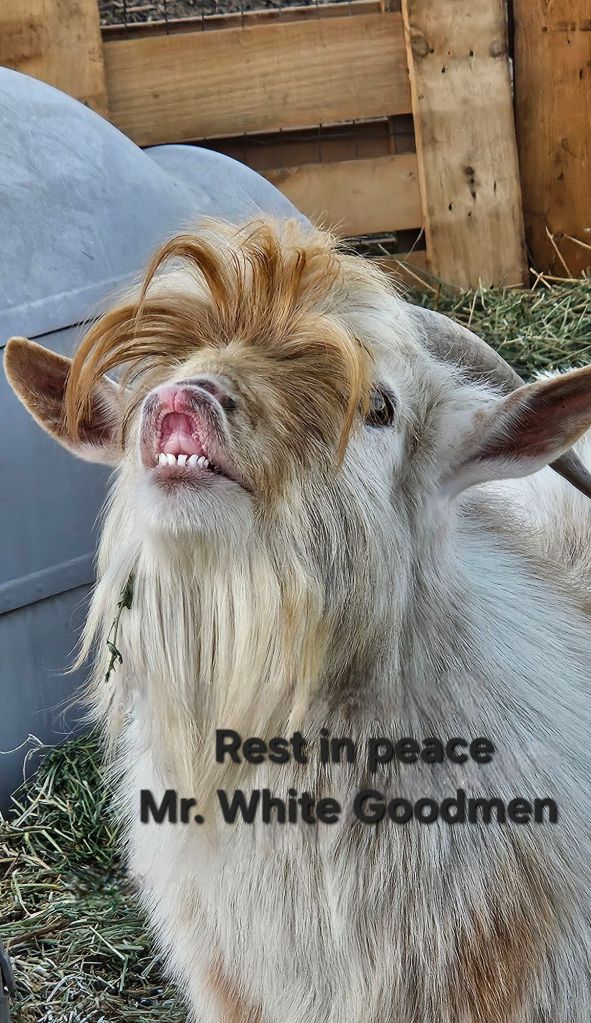
Recently, we lost our Mr. White Goodmen. He wasn’t the goat that came running for pets or scratched his head against your leg. In fact, he made it very clear that humans were more of an inconvenience than a source of affection. He’d give you that look—the one that said you were interrupting his important goat business—and move on with his day.
But he was a handsome buck. Strong. Striking. Exactly who he was meant to be. And he will be missed.
Homesteading isn’t just about growth and abundance. It’s also about learning to hold gratitude and grief at the same time. About loving deeply, even when you know loss is part of the deal.
This is one of those days we don’t post cute pictures. But it’s still part of our story. Rest easy, Mr. White Goodmen. 🤍
There’s something magical about asking gardeners this question. Their eyes light up, their shoulders lift, and suddenly you’re buried under stories about heirloom varieties, surprise successes, and that one plant they’ll never grow again because it tried to take over the entire yard.
For me, choosing a favorite is impossible—so I pick three: tomatoes, peppers, and pumpkins. Each one brings its own kind of joy to the garden, and honestly, I’d miss them if one didn’t make it into the yearly lineup.
Tomatoes: The Overachievers of Summer
Tomatoes are the divas of the garden—demanding, dramatic, and always worth it. There’s nothing like checking the vines in midsummer and seeing those bright red gems shining back at you. Whether it’s a handful of cherry tomatoes for snacking or a big slicer destined for a BLT, they never disappoint. They’re the heart of my garden and the one plant I always make room for… even when I swear I won’t plant as many next year.
A Quick Note About Tomatoes & Livestock Safety
As much as we love growing them, tomatoes come from the nightshade family. That means the green fruits, stems, and leaves contain solanine—a natural toxin that livestock shouldn’t consume. Animals like goats, sheep, pigs, and chickens etc..should not be fed green tomatoes or tomato plants, as they can cause digestive issues or more serious problems.
Ripe tomatoes are fine for them but the whole plant and green tomatoes should stay out of the livestock treat bucket.
Peppers: The Flavor Builders
Peppers come with personality. Sweet, spicy, crunchy, colorful—there’s a pepper for every mood. I love how they quietly do their thing all season long without making a fuss. They’re sturdy, dependable, and generous once they start producing. From fajitas to salsa to stuffing them for dinner, peppers earn their keep on my homestead!
A Fun Fact About Chickens
People love to joke that giving spicy peppers to chickens might make the eggs spicy, or even the chicken itself. ( as if they can be pre-seasoned 🤣) Thankfully, that’s just a funny homestead myth. Chickens cannot taste capsaicin—the compound that makes peppers hot—so they can chow down on jalapeños like they’re snacking on mild bell peppers. And no, it won’t make your Sunday dinner spicy. It’s just one of those quirky, almost-disappointing facts.
Pumpkins: The Garden Party Guests
Pumpkins are the plants that make you feel like a kid again. Watching the vines sprawl across the yard, spotting those bright green globes forming under the leaves. Then the excitement of them turning orange or white —there’s something so wholesome about it. Pumpkins carry a bit of magic with them, and harvesting them feels like celebrating the end of the growing season with a big, round trophy.
Pumpkins for Livestock: More Than Just a Treat
One of the reasons I love growing pumpkins is how useful they are around the homestead. From seeing the joy on my children’s faces to seeing the livestock enjoying them. Many livestock keepers feed pumpkins (especially the seeds) as a natural support for deworming. Look up the holistic ways pumpkins can help. Remember pumpkins are a great treat that can help support a healthy gut. Goats, chickens, pigs, and cows all love them—and nothing goes to waste.
So now I want to know… what’s your favorite thing to grow in your garden? Is it something practical, something nostalgic, or something that just makes you smile? Drop a comment and share—gardeners love to swap stories, after all.
Thank you for reading my blog! If you would please share my blog on social media platforms, I would greatly appreciate it.
When Your City Friends Start Treating You Like You Joined a Cult.
The minute you tell your city friends you’ve started homesteading, something changes. Suddenly, you’re no longer just you — you’ve become “that friend who milks goats and talks about compost like it’s a lifestyle.”
They’ll smile politely while clutching their oat milk lattes and say things like, “That’s… so rustic of you!” (Translation: You’ve lost your mind, and we’re worried you might start wearing overalls to brunch.)
Next thing you know, they’re asking werid questions: “Do you still have Wi-Fi out there?” “Isn’t it, like, lonely?” “Wait… you actually eat the eggs your chickens lay and the chickens?” Yes, Beatrice. That’s literally the point.
Then come the backhanded compliments. “You’re living such a simple life!” — as if I traded my brain for a butter churn. “I wouldn’t live like you, especially when there are supermarkets but so awesome for you” “You must save so much money growing your own food.” (Sure, after you buy the fencing, the feed, the vet supplies, and the tractor that costs more than your car.)
But deep down, you can tell they’re a little jealous. While they’re stuck in traffic, I’m collecting fresh eggs and watching my goats do their daily comedy routine. While they’re paying $8 for a salad, I’m eating one that grew right on my homestead — and yes, it tastes better because I did it and I didn’t have to parallel park for it.
Quick Lesson for the City Folks: What’s What Out Here
Before Beatrice starts calling my place “the farm,” let’s clear up a few things — because not every patch of land with animals and dirt is the same:
A Farm – This is where people grow crops or raise animals mostly for income. Think rows of corn, dairy barns, and tractors that look like they belong in a museum of heavy machinery. Farms are about production — feeding communities, selling goods, and (hopefully) turning a profit.
A Ranch – Now, ranches are a whole different vibe. Ranchers are the folks managing big open land, usually raising cattle or other livestock. It’s cowboy country — less “cute chickens” and more “herding 200 head of beef on horseback.” If you’re picturing a cowboy hat and a big sky, you’re right on target.
A Homestead – That’s me. Homesteading is more about self-sufficiency than big business. It’s growing your own food, raising animals for your own table, and learning to live a little more independently. It’s where the goal isn’t “profit,” it’s “peace.” (Okay, and maybe bragging rights when your tomatoes actually grow.)
So, let them think I’ve gone full Little House on the Prairie. That’s fine. I’ll be over here with my animals, my garden, and my peace and quiet — living the dream they’ll never admit they want.
Thank you for reading my blog. If you would share on social media platforms I would greatly appreciate it!
When we first decided to add pigs to the homestead, I’ll admit — I was a little nervous. I had visions of giant hogs running me down! 🤣
Then my husband said look at the Kune Kune pig, and everything I thought I knew about pigs changed.
These little charmers are the gentle souls of the pig world — short, round, friendly, and full of personality. The kind of pig that’ll follow you around like a dog, grunt for attention, and flop over dramatically for a belly rub the second you look their way.
🌿 A Bit of Kune Kune History
The name Kune Kune (pronounced “koo-nee koo-nee”) actually means “fat and round” in Māori — and honestly, it fits them perfectly. These pigs hail from New Zealand, where they were traditionally kept by the Māori people. By the 1970s, they were nearly extinct, but thanks to a few dedicated breeders, they’ve bounced back in a big way and made their way to homesteads all over the world.
🏡 What Makes Them So Special
Kune Kunes are small pigs with big personalities. Fully grown, they weigh between 100 and 250 pounds — sturdy but manageable. They come in every color combination imaginable — black, ginger, cream, white, and spotted like little cows. Some even sport adorable chin tassels called piri piri, which give them an extra dose of charm.
But here’s the best part: Kune Kunes are true grazers. Unlike most pigs that love to root and till everything in sight, these pigs prefer to munch on grass. That means your pastures should stay intact, your yard doesn’t look like a battlefield, and you get your very own eco-friendly lawn crew.
🌾 Easy Keepers for the Small Homestead
Because Kune Kunes can thrive mostly on grass, they’re one of the most affordable pigs to keep. A bit of supplemental grain, veggies, or fruit keeps them happy and healthy. They also don’t require massive barns or complicated setups — just a simple shelter for shade and protection, some fencing, and room to roam. They’re quiet, calm, and social, which makes them perfect for small homesteads. My Kune Kunes love to greet me every morning with cheerful grunts, waiting patiently (well, mostly patiently) for their breakfast.
❤️ Personalities You Can’t Resist
Every Kune Kune has a unique personality. We have one who thinks she’s a goat, until we moved her over with the other pigs. We also had a few that think they are better off with the cows. No matter how many times we moved them out of the cows pasture they decided thats where they belong. The cows don’t mind at all, in fact I believe my heifer loves them more than she does anything else. 🤣 They’re affectionate, curious, and genuinely seem to enjoy human company.
They’re the kind of animal that turns daily chores into moments of joy. There’s nothing quite like hearing those happy snorts as they waddle over to say hello.
🐖 Thinking About Breeding?
If you ever decide to raise Kune Kunes, you’re in for a treat. They’re wonderful mothers, usually with small, manageable litters. They are pregnant for three months three weeks and three days. ( 116 to 118 days ) Piglets are sturdy, friendly, and ridiculously cute — tiny versions of their round parents, complete with little grunts and wiggles. Handled early, they grow into some of the most even-tempered pigs you could ask for. And honestly, watching them grow up on pasture is one of the most rewarding parts of homesteading life.
🌞 Why I’ll Always Have Kune Kunes
For me, Kune Kunes aren’t just another homestead animal — they’re part of the family. They make me laugh daily, with learning to sit and to do other tricks. They’re proof that pigs can be both practical and downright delightful. If you’ve ever wanted pigs but were intimidated by the idea, start with Kune Kunes. They’re gentle, friendly, and while they can be easy on the land remember they are pigs and while I have a few that are wonderful. I also have a few that like to root up the bottom of the fence! Yes I said it. While kune kune are known as the pig breed that won’t do this, you have to keep in mind when they want those weeds or grain on the other side of the fence they will be the first to show you that your fence wasn’t made for them! There are many different options for what to do. Do your research for what fencing you think will work for your homestead.
We have our fencing lined with wood at the bottom. Its been working great and even started doing this idea in other areas of our homestead. So remember — Life’s better with Kune Kunes — they mow your grass, steal your heart, and occasionally your snacks. 💚🐷
This is Palmer enjoying some pumpkin plant Patty looking beautiful while she moves around her breakfast ( hay )
Thank you for taking the time to read my blog. If you would share my blog I would greatly appreciate it.
💬 You ever have that one goat who looks like they’ve been through a bad breakup — dull coat, rough skin, attitude for days? Yeah… turns out it’s not sass, it’s a mineral problem. 😅
I used to think salt blocks were enough until my goats gave me that “you tried” look and walked off. Now I’m deep in the world of copper boluses, selenium and balancing calcium like I’m running a goat chemistry lab. Here’s what I’ve learned about the minerals your goats actually need — and how to keep your herd looking fabulous while still chewing your fences.
🧂Rock On, Goats! — My Never-Ending Quest for the Right Minerals 🐐✨
If you’ve owned goats for longer than five minutes, you’ve probably realized two things: 1️⃣ They’ll eat / taste everything except what you actually want them to. 2️⃣ They somehow need more supplements than a bodybuilder. I used to think minerals were just a fancy word for salt. (You know, the stuff you set out and hope they lick once in a while.) Oh, how wrong I was. Turns out, minerals are one of the most important parts of keeping goats healthy, shiny, and sassy — and my herd has helped me along this journey.
🧲 Salt (Sodium & Chloride): The Goat Snack That Isn’t a Snack
When I first started, I set out one of those big red mineral blocks like you’d give to cows. My goats sniffed it, gave me a look of deep betrayal, and walked away. Lesson learned: goats don’t like working that hard for their minerals. Now I give them loose minerals with salt mixed in, and they actually use it. Salt helps keep their hydration and muscles in check — and saves the goats trying to lick the barn walls….haha they still lick the walls 😂. They are goats doing goat things.
💪 Calcium & Phosphorus: The Dynamic Duo
These two are like the peanut butter and jelly of goat nutrition. They keep bones, muscles, and milk production in top shape. But they’ve got to stay balanced. Too much phosphorus (usually from too much grain) can lead to urinary stones in males. So I keep an eye on their calcium-to-phosphorus ratio and try to keep it around 2:1. It’s basically math, but with goats staring at you while you do it.
🧡 Copper: The Diva Mineral
Copper might as well wear sunglasses and demand filtered water — it’s that dramatic. Goats need it for shiny coats, strong immune systems, and good fertility. But too little copper, and you’ll see faded coats, balding tails, and a whole lot of attitude.
✨ Never buy “sheep and goat” minerals unless you enjoy disappointment. Also don’t give your sheep a lot of copper that can kill them, goats require more than what sheep can handle.
🌞 Selenium: The Tiny Powerhouse
If you’re in a selenium-deficient area like me, you know the struggle. Selenium keeps muscles strong — especially in newborn kids. A lack of it can lead to “white muscle disease,” which is as awful as it sounds.
My fix? I use a loose mineral selenium, as with everything you need to be careful too much could be crucial because it is possible to overdose, which can be toxic or fatal to goats.
💅 Zinc: Because Goats Deserve Great Skin, Too
Zinc helps with skin, hooves, and immune health. If I start seeing flaky skin or bald patches around noses, I know zinc might be low. But here’s the kicker — too much calcium can block zinc absorption. It’s all a balancing act… and honestly, I think goats enjoy watching us stress about it.
🦴 Magnesium & Manganese: The Unsung Heroes
These guys don’t get the spotlight, but they’re just as important. • Magnesium supports muscle and nerve function (a deficiency can lead to stiffness or even tetany). • Manganese helps with bone growth, fertility, and milk production.
Basically, these two are like the quiet farmhands keeping everything running smoothly behind the scenes.
🍌 Potassium: The Energy Booster
Potassium keeps goats hydrated and supports muscle and heart health. It’s especially important during hot weather or if your goats get scours (diarrhea).
If your goats look tired or weak after a heatwave, a little extra potassium — usually from good-quality forage or supplements — can make a difference.
💨 Sulfur: The Coat Supporter
Sulfur helps build healthy hair, hooves, and amino acids. It’s one of those “don’t think about it till it’s gone” minerals. Just be careful — too much sulfur can block copper absorption, leading to those dreaded faded coats.
🧂 Iodine: The Throat Protector
Iodine keeps the thyroid running smoothly. Without it, goats can develop goiters (yep, neck lumps) and may have breeding or kidding issues.
💙 Cobalt: The Vitamin B Buddy
Cobalt is like the behind-the-scenes producer for Vitamin B12 — goats need it for digestion and energy. Without enough cobalt, they can get anemic or lose weight even when they’re eating fine. Cobalt is often overlooked, but it’s vital for rumen health.
⚙️ Iron: The Oxygen Carrier
Iron keeps the blood healthy and helps prevent anemia. It’s especially important for kids and lactating does. Usually, good hay and forage provide enough, but goats that are wormy or recovering from illness might need extra support.
🧡 Blocks vs. Loose Minerals
Forget the blocks. Goats just don’t get enough from them. Loose minerals are where it’s at. While you should keep your minerals in a covered feeder inside the barn or at least something over them, so it stays dry! I have yet to do this. I would highly recommend something with a cover though. If it gets wet, the goats will be unhappy and so will you. When the minerals get wet they clump together or can get moldy. If you do have them uncovered as I do then watch the weather as best as you can if it looks like rain remove the trays.
⚖️ Finding the Balance (and Your Sanity)
Goat minerals are all about balance. Too much iron or sulfur can block copper. Too much calcium can block zinc. It’s like nutritional Jenga — one wrong move, and your goats start looking rough. But don’t panic. Start with a good-quality, goat-specific loose mineral I use sweetlix, my goats have access to this all the time, and while I only went over a few of the minerals there are many more! Where do I get my other minerals from… Little Avalon Farm. They sell the minerals along with other things, they also have lots of information!
🪶 The Bottom Line
If your goats could talk, they’d probably say: “Thanks for the minerals, now hand over your sandwich.” Keeping a good mineral mix available year-round is one of the easiest ways to keep your herd healthy, shiny, and ready to cause more barnyard drama. So if you haven’t yet, set out some fresh loose minerals — and watch your goats rock on!
🏡 From the Homestead:
Out here, there’s always something new to learn — whether it’s how to balance minerals or how to convince your goats not to stand on top of the mineral feeder. Every season brings a new lesson, a few muddy boots, and at least one goat that refuses to cooperate. But honestly? I wouldn’t trade this crazy, mineral-measuring, goat-chasing life for anything. 💚 Here’s to shiny coats, healthy herds, and never running out of coke… because these goats sure aren’t slowing down anytime soon. 🥤🐐
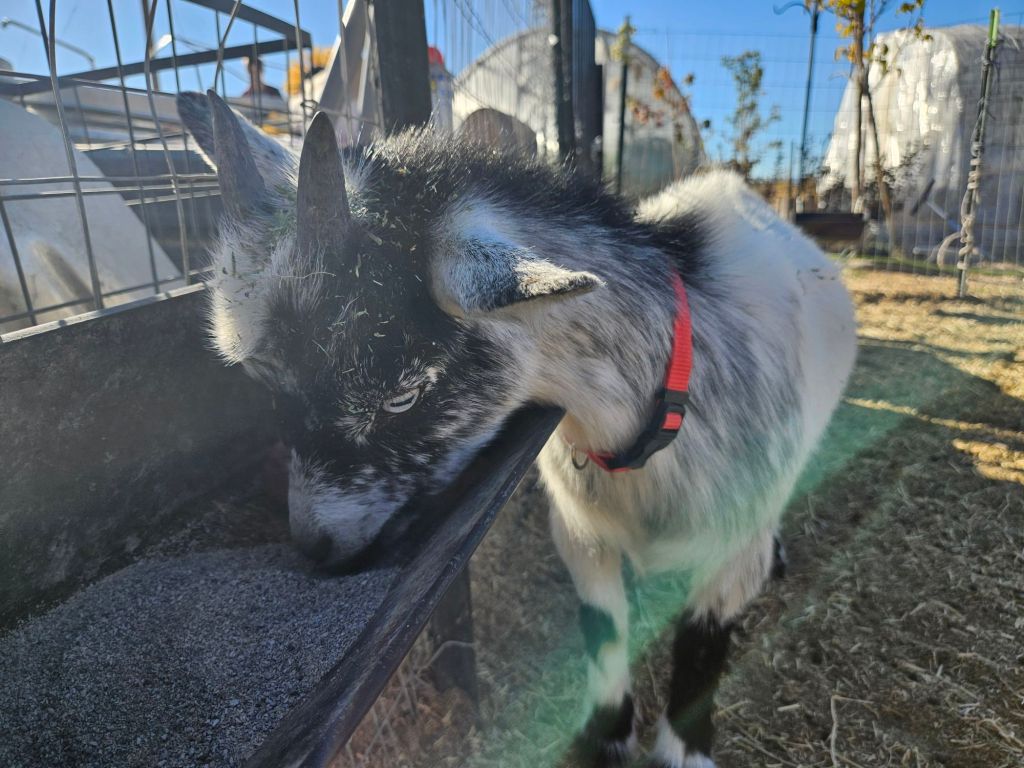
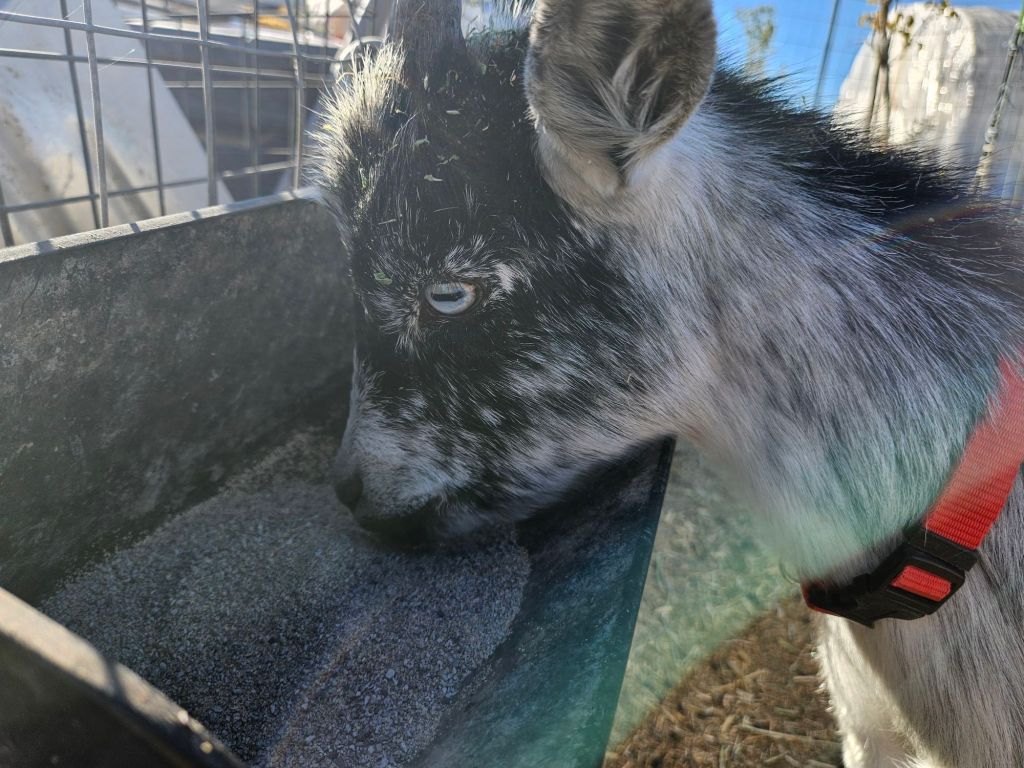
Maggie enjoying some minerals ( silicon.)
Thank you for reading! Please share my blog on your social media platforms!



 Backyarding And Kids