✨Nigerian Dwarf goats are one of the most popular goat breeds for homesteads and small farms – and it’s easy to see why!
They are adorable, fun-sized, and full of personality. Plus, their milk is creamy, sweet, and higher in butterfat than most other dairy goats. But before you bring these little charmers home, let’s talk about how to care for them properly.
🏡 Housing & Shelter Even though Nigerian Dwarfs are small, they still need a safe and comfortable place to live. • Shelter: Provide a dry, draft-free space with good ventilation. A three-sided goat shed works well in mild climates, but in colder areas, a fully enclosed barn or goat house is best.
• Space: Plan for at least 20 sq. ft. of indoor space per goat, plus plenty of outdoor room to roam.
• Bedding: Straw or pine shavings make cozy bedding. Just remember to keep it clean and dry.
🚧 Fencing If you’ve heard goats are escape artists… it’s true. Nigerian Dwarfs may be small, but they’re clever!
• Use strong fencing (woven wire or cattle panels work, but make sure they can’t get through the cattle panels. I have put up extra fencing wire on mine because I have one doe that can fit through)
Make sure it’s at least 4 feet tall, they say. If you can make that work, then awesome, but I have started going with 6 ft. • Check often for weak spots they will find it!
🥕 Feeding Nigerian Dwarfs thrive on a good diet. • Hay: A constant supply of good-quality hay should be the main part of their diet. ( I used to feed a mix of grass hay. Now I only do alfalfa hay )
• Grain: Only give in moderation. We only give it to the does that are in milk. Otherwise, they get it every 4 weeks when hooves are being done.
• Minerals: Keep a goat mineral block or loose minerals available at all times. (most prefer loose minerals)
• Water: Fresh, clean water! No matter what you use for keeping their water in. It is going to get dirty. Give those buckets or troughs a good scrubbing every now and then.
🩺 Health & Grooming Taking care of their health is key to happy, long-living goats. • Hoof trimming: Every 4–6 weeks, keep their hooves from overgrowing.
• Vaccinations / deworming Do your research if you decide this way for your livestock. Remember if using a vet check and make sure they know about goats.
For my herd, I use holistic care. Please do your research on both ways to find out which way is best for you.
I recommend the book Holistic Goat Care: A Comprehensive Guide…
By Gianaclis Caldwell
• Grooming: Their short coats don’t need much, but a quick brush helps keep them clean. we do a brushing when they are getting milked or hooves done.
Enrichment & Personality are playful, curious, and social. • Goats are herd animals. No matter what breed you have, you need more than one! (one goat is a lonely goat!)
• Provide climbing structures like stumps, rocks, or wooden platforms. They will give you lots of laughs as you watch them play.
• Spend time with them-they can be very affectionate, but just like humans, they have their own personalities too. Yes! They can even learn tricks, but remember that takes time and patience and snacks!(treats)
Why They’re Worth It Caring for Nigerian Dwarfs takes some effort, but the reward is huge. They’ll give you milk, laughter, and endless entertainment with their silliness.
Plus, their gentle, family-friendly nature makes them a favorite for both kids and adults. If you’re looking for a goat that’s easy to manage, full of love, and perfect for small homesteads, the Nigerian Dwarf might just be the goat of your dreams.
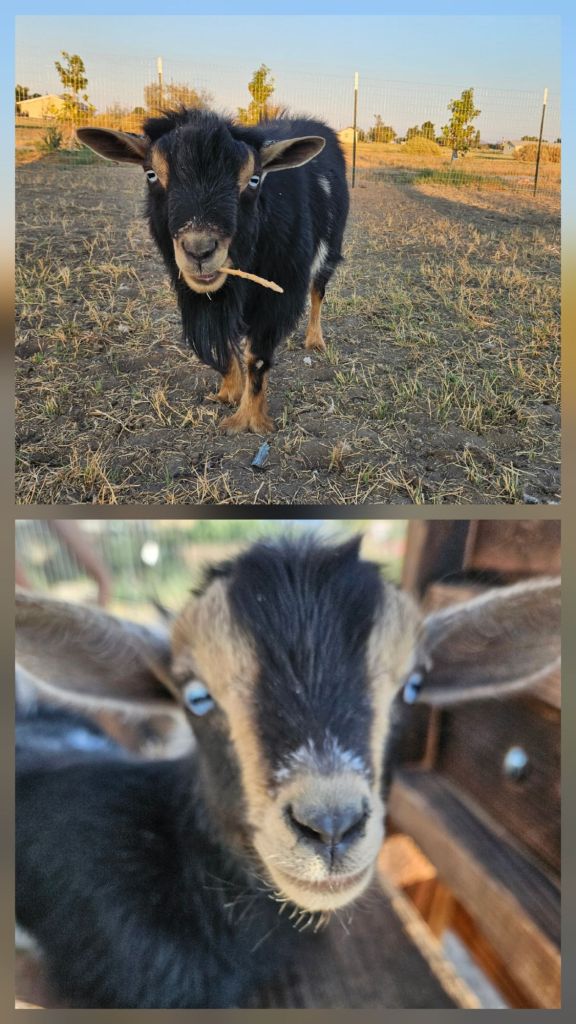
Here is a photo of Frank. The top photo is him at year and 5 months old. The bottom photo is him at 4 weeks old.

 Backyarding And Kids
Leave a comment